
Wasp control in San Antonio, Texas
San Antonio’s warm climate makes it a hotspot for wasps, especially during the spring and summer months. While these flying insects play an important role in pollination and pest control, they can also be aggressive, particularly when they feel their nests are threatened. If you’ve ever had a run-in with a wasp in your backyard, you know how unsettling it can be. Let’s take a closer look at the wasp species found in San Antonio, the risks they pose, and how you can keep them away from your home.
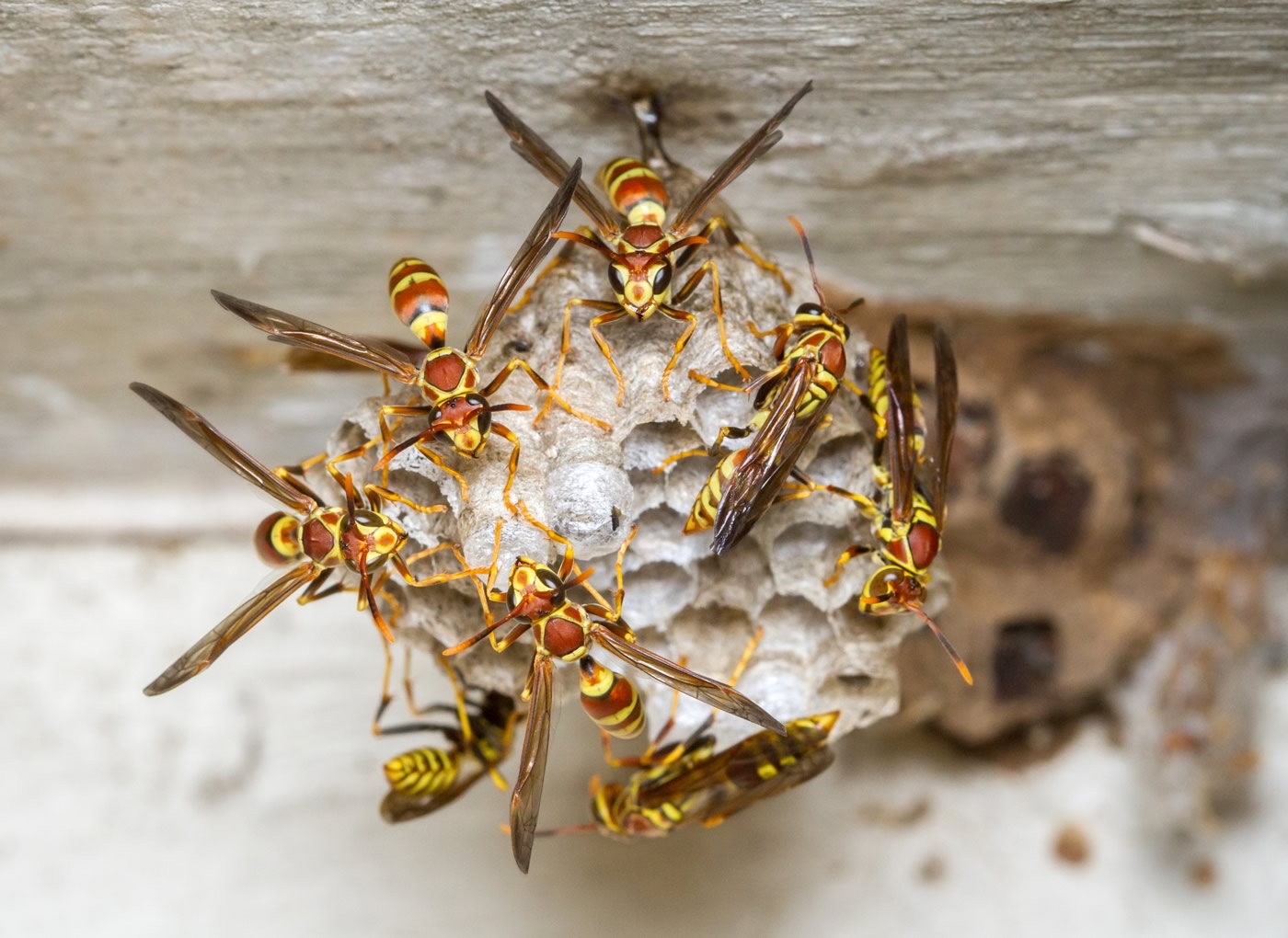
Common Wasp Species in San Antonio
1. Paper Wasps (Polistes spp.)
- Brownish with yellow or red markings.
- Build open, umbrella-shaped nests under eaves, porch ceilings, and tree branches.
- Can be aggressive if their nest is disturbed but generally not as hostile as other wasp species.
2. Yellowjackets (Vespula spp.)
- Bright yellow and black, often mistaken for bees.
- Build nests underground or in wall voids, attics, and tree hollows.
- Extremely aggressive and will sting repeatedly if provoked.
3. Mud Daubers (Sceliphron spp. & Trypoxylon spp.)
- Black or metallic blue with long, thin waists.
- Construct tube-like mud nests on walls, ceilings, and outdoor structures.
- Solitary and non-aggressive, rarely stinging humans.
4. Red Wasps (Polistes carolina)
- Their sting is painful, but they are generally less aggressive than yellowjackets.
- Reddish-brown with dark wings.
- Commonly found in wooded areas and urban neighborhoods.
What to Do If You Find a Wasp Nest
If you discover a wasp nest on your property, take caution before trying to remove it:
- Never swat at wasps – This can provoke them and increase the chances of getting stung.
- For small nests – Wait until nighttime when wasps are less active, then use a wasp spray from a safe distance.
- For large or hard-to-reach nests – Call a professional pest control service to safely remove it.
How to Keep Wasps Away from Your Home
To prevent wasps from building nests around your property, follow these steps:
- Seal Entry Points – Check for cracks in walls, vents, and attics where wasps could enter and nest.
- Remove Food Sources – Wasps are attracted to sugary foods and proteins, so keep trash cans sealed and clean up outdoor eating areas.
- Reduce Standing Water – Birdbaths, leaky hoses, and pet water bowls can attract thirsty wasps.
- Use Wasp-Repelling Plants – Mint, eucalyptus, citronella, and marigolds naturally deter wasps.
- Hang Wasp Decoys – Some wasp species are territorial and avoid areas where another colony is already established.
truguards process to help control wasps
- Inspection: Our wasp nest control process begins with an assessment of the nest’s location, size, and species of wasps present. We evaluate the level of risk associated with the nest’s proximity to people and structures.
- Removal/Treatment Plan: Based on the assessment, we create a customized wasp plan designed to address your specific situation. Our approach prioritizes the safe removal of the nest and the elimination of wasps.
- Removal: Our skilled professionals use specialized equipment and techniques to safely remove the wasp nest from its location. We take great care to minimize the risk of stings and prevent harm to the community.
- Wasp Control: TruGuard is committed to ensuring that the threat of wasps is completely eliminated. We use methods to eliminate wasps and help prevent their return.
- Prevention Guidance: To prevent future wasp nest issues, we offer guidance on measures you can take to deter wasps from nesting in or around your property.


Wasps are a natural part of life in San Antonio, but that doesn’t mean you have to put up with them near your home. By taking preventive measures and acting quickly when nests appear, you can reduce the chances of painful stings and unwanted wasp activity.
Have you had any wasp encounters in San Antonio? If so fill out the information down below for a free quote.

 TruGuard Pest Control